Living in East Passyunk: Neighborhood Guide
East Passyunk is one of those Philadelphia neighborhoods that tends to surprise people the first time they visit. The main commercial strip is legitimately good — not “good for Philly” good, but competitive with anything you’d find in a major American city. And the residential streets that branch off it are full of classic South Philly rowhouses on a scale that still feels like a real neighborhood rather than a theme park. If you’re weighing whether this part of South Philadelphia makes sense for your next move, here’s what it’s actually like to live here.
Where East Passyunk Is and How the Neighborhood Is Laid Out
East Passyunk sits in South Philadelphia, roughly bounded by Broad Street to the west, Washington Avenue to the north, and the Italian Market area to the east, though locals draw the lines differently depending on who you ask. The defining feature is East Passyunk Avenue itself, a diagonal street that cuts through the otherwise grid-based street plan and creates a string of triangular intersections that give the neighborhood its distinctive look and feel.
Passyunk Square — the actual square at the intersection of Passyunk, 13th, and Tasker — acts as a kind of anchor point. The surrounding blocks are dense and walkable, with very little surface parking eating into the streetscape. Once you get a few blocks off the Avenue, the residential streets quiet down considerably and feel more like traditional South Philly blocks than a commercial corridor.
Housing Stock and Architecture
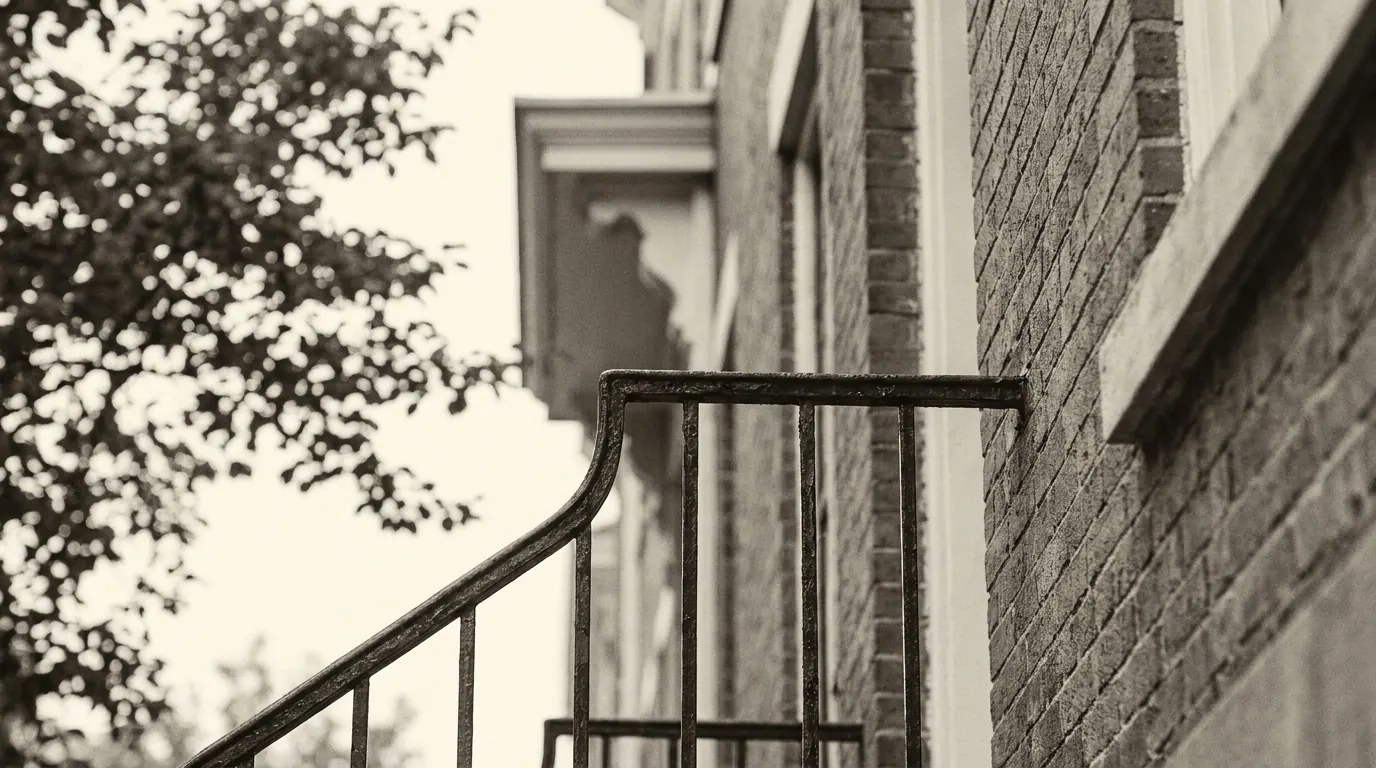
The overwhelming majority of homes in East Passyunk are attached rowhouses — two- and three-story brick structures built primarily in the late 19th and early 20th centuries. They typically feature a living room, dining room, and kitchen on the first floor, two or three bedrooms upstairs, and a basement that’s sometimes finished but often used for storage and mechanicals. Most have a small rear yard or patio rather than anything you’d call a garden.
You’ll also find converted properties: single-family rowhouses that were subdivided into condos or duplexes at some point, which creates entry points at lower price levels than a full house. New construction exists but is less common here than in some adjacent neighborhoods — East Passyunk’s blocks are pretty fully built out, so infill projects tend to be conversions or the occasional teardown replacement rather than large-scale development.
Interior finishes vary wildly. Some homes have been meticulously renovated with updated kitchens, exposed brick, and finished basements. Others are largely original and present real opportunity for buyers who want to put their own stamp on a place. The bones — original hardwood floors, solid brick construction, proper room sizes — tend to be consistent and good.
The Avenue: What East Passyunk’s Commercial Strip Is Actually Like
East Passyunk Avenue has earned a national reputation for its restaurant scene, and that reputation is not overblown. The strip between roughly Broad and Morris Streets has an unusually high concentration of independent restaurants, from James Beard-recognized destinations to neighborhood spots that have been around for decades. Plenty of bars, a few coffee shops, a cheese shop, a wine shop, a record store, and some boutique retail round things out. Weekend evenings on the Avenue are genuinely lively.
On the practical side, day-to-day errands are manageable but require some planning. A grocery run typically means heading to a supermarket on Washington or Oregon Avenue rather than walking to a full-service store on the strip. The Italian Market on 9th Street is nearby and excellent for fresh produce, meat, and specialty items, but it’s not a substitute for a weekly grocery shop unless you enjoy the process of putting a haul together piece by piece (some people do).
Getting Around: Commute and Transit
East Passyunk is well-positioned for getting into Center City without a car. The Broad Street Line runs north-south and has stops at Ellsworth-Federal and Tasker-Morris that put you in the heart of downtown in roughly 10 to 15 minutes. Multiple bus routes also serve the area, including routes on Passyunk Avenue itself and on Broad Street.
Walking to Center City is possible — it’s roughly a 20- to 35-minute walk depending on your exact block and your destination — and plenty of residents do it regularly. The flat terrain helps.
Biking is a reasonable option. Passyunk Avenue has a bike lane, and the broader network of South Philly streets is navigable, though the quality of infrastructure is uneven. Indego bike share has stations in the area.
If you commute by car, expect to deal with South Philly parking reality: street parking is competitive, especially evenings and weekends when the Avenue draws visitors from across the city. There are no garages serving the residential blocks. If parking a car daily is a hard requirement, factor that into your decision — some blocks are easier than others, and it’s worth walking around on a Friday night before you commit.
For regional travel, I-76 and I-95 are both reachable, and SEPTA’s regional rail network connects to the broader Philadelphia metro from stations nearby.
Walkability and Day-to-Day Livability
East Passyunk scores well on walkability by any reasonable measure. Most daily needs — coffee, a meal out, a drink, a haircut — are within easy walking distance. The neighborhood is compact enough that you can know your local spots well, and the Avenue provides enough foot traffic to feel active without being overwhelming outside of peak dining hours.
The flip side: it’s a dense urban neighborhood with all that entails. Streets are narrow. Neighbors are close. There’s noise — from the Avenue on weekends, from traffic on Broad, from the general adjacency of city life. People who move here from quieter environments sometimes need an adjustment period; people moving from other dense urban neighborhoods typically adapt quickly.
Schools
East Passyunk is served by the School District of Philadelphia. The district offers a mix of neighborhood schools and citywide special admission and magnet programs. School assignments, enrollment processes, and program availability change — the district’s website and conversations with families currently in the neighborhood are the right starting points for current, accurate information. Do not rely on rankings or ratings you find online without verifying when they were last updated and what they actually measure.
Buying a Home in East Passyunk: What You Should Know
Philadelphia is a city where the transaction mechanics matter and it pays to understand them before you’re under contract.
Transfer Taxes
Philadelphia imposes a real estate transfer tax in addition to the state transfer tax. Both are typically split between buyer and seller, but the split is negotiable and should be addressed in the agreement of sale. The combined rate is meaningful — confirm the current figures with your agent and factor them into your closing cost estimates early.
The Agreement of Sale
Pennsylvania uses a standard agreement of sale form. Unlike New Jersey (where attorney review is a standard part of the process), Pennsylvania does not require an attorney, but many buyers choose to involve one for review. An experienced buyer’s agent who knows the Philadelphia market can walk you through the contract specifics, contingencies, and what’s customary in this market.
Financing and Buying Power
Because Alban Hoxha works in both real estate and mortgage, Hox Real Estate clients have the option of working through financing questions with the same team handling the purchase — which tends to simplify the process. If you want a clear-eyed picture of what you can actually afford in a neighborhood like East Passyunk before you start attending open houses, a custom buying power report is a useful first step.
What to Expect in This Market
East Passyunk has historically attracted strong buyer interest, particularly for move-in-ready renovated rowhouses. Well-priced homes in good condition tend not to sit. If you’re buying here, arriving pre-approved and ready to move quickly matters. If you’re selling, presentation and pricing strategy still drive outcomes — the demand is real, but overpriced listings still sit.
Sellers can get started at hoxrealestate.com/i-want-to-sell to connect with Hox Real Estate about listing strategy for this specific neighborhood.
Is East Passyunk the Right Fit?
That depends almost entirely on what you want from a neighborhood. If you’re looking for walkability, a serious dining and bar scene you can step out of your front door into, convenient transit to Center City, and classic Philadelphia architecture — East Passyunk delivers on all of those. If you need a driveway, a yard with real square footage, quiet streets, or a suburban-scale grocery store within walking distance, this particular neighborhood is going to create friction in your daily life.
The rowhouse format and dense block pattern means the neighborhood suits buyers who are comfortable with close urban living. Budget-wise, East Passyunk is competitive — this is not the most affordable entry point into Philadelphia homeownership, but it is generally more accessible than comparable neighborhoods in Northwest Philadelphia or the city’s fastest-appreciating areas. Condo and duplex units open the door at lower price points for buyers who don’t need a full house.
One thing worth doing before you decide: visit on a Tuesday afternoon and then again on a Saturday night. The neighborhood feels genuinely different, and both versions are real. Make sure you like both.
Frequently Asked Questions
Is East Passyunk the same as South Philadelphia?
East Passyunk is a neighborhood within South Philadelphia — South Philly is a broader section of the city that encompasses many distinct neighborhoods, including Point Breeze, Pennsport, Girard Estates, and others. When people say “South Philly,” they’re generally referring to the area south of South Street and west of the Schuylkill. East Passyunk is one of the more recognizable sub-neighborhoods within that larger area, largely because of the Avenue.
How hard is parking in East Passyunk?
Parking is a legitimate daily consideration. On residential blocks it’s manageable during daytime weekday hours, but evenings and weekends — especially near the Avenue — it gets competitive as visitors come in from other parts of the city. There are no residential garages. If you own a car, budget time for finding a spot and consider which specific block you’re on when evaluating a property.
What are the realistic housing options in East Passyunk?
The primary options are single-family rowhouses (typically two or three stories), condo units carved out of converted rowhouses, and the occasional duplex. New construction is limited given how built-out the neighborhood is. Rowhouses range from largely original condition to fully renovated, and price reflects that spread. Condo units offer a lower entry point but come with HOA considerations and shared-wall living at a different scale than a full house.
What should I know about the Philadelphia home buying process before I start looking here?
A few things matter particularly in Philadelphia. First, the combined city and state transfer taxes add up to a real line item in your closing costs — get a full estimate before you’re under contract. Second, the market for well-positioned properties can move quickly, so arriving pre-approved rather than pre-qualified makes a practical difference. Third, some buyers choose to have an attorney review the agreement of sale even though it’s not required in Pennsylvania. Working with an agent who knows this specific market and who can connect you with financing is the simplest way to navigate it — you can explore your options at hoxrealestate.com/buy-philadelphia.
If you’re seriously considering East Passyunk — whether you’re ready to move now or still in the research phase — reach out to Alban Hoxha and the team at Hox Real Estate. Between the real estate and mortgage sides of the business, you’ll get straight answers on both what homes are actually trading for and what you can actually afford to spend — no runaround, no pressure.
Thinking about buying here?
Get local advice and in-house pre-approval from one team.
More neighborhood guides
Buying a Home in Moorestown, NJ
Moorestown is one of those towns that doesn’t need much of a sales pitch. It has a tree-lined main street, older homes with actual character, and a commute to Philadelphia that’s genuinely manageable.
Read the guide →
Living in Northern Liberties: A Buyer’s Guide
Northern Liberties sits just north of Old City and directly across the highway from Fishtown, and for anyone who has spent time walking its streets, it’s easy to understand why the neighborhood keeps drawing serious...
Read the guide →
Moving to Haddonfield, NJ: What to Expect
Haddonfield keeps coming up for a reason. People who visit once — maybe for lunch on Kings Highway, maybe to walk around the tree-lined streets on a fall afternoon — tend to start checking Zillow by the time they get...
Read the guide →